Loofah, my love <3
I do the dishes almost every day. Each time, I'm confronted by the sponge that I use to scrub my pots, pans, and tea-stained drinkwares. Like most sponge normies, I started off with your classic squishy-bottom-sponge-with-a-scrubber on top combo:
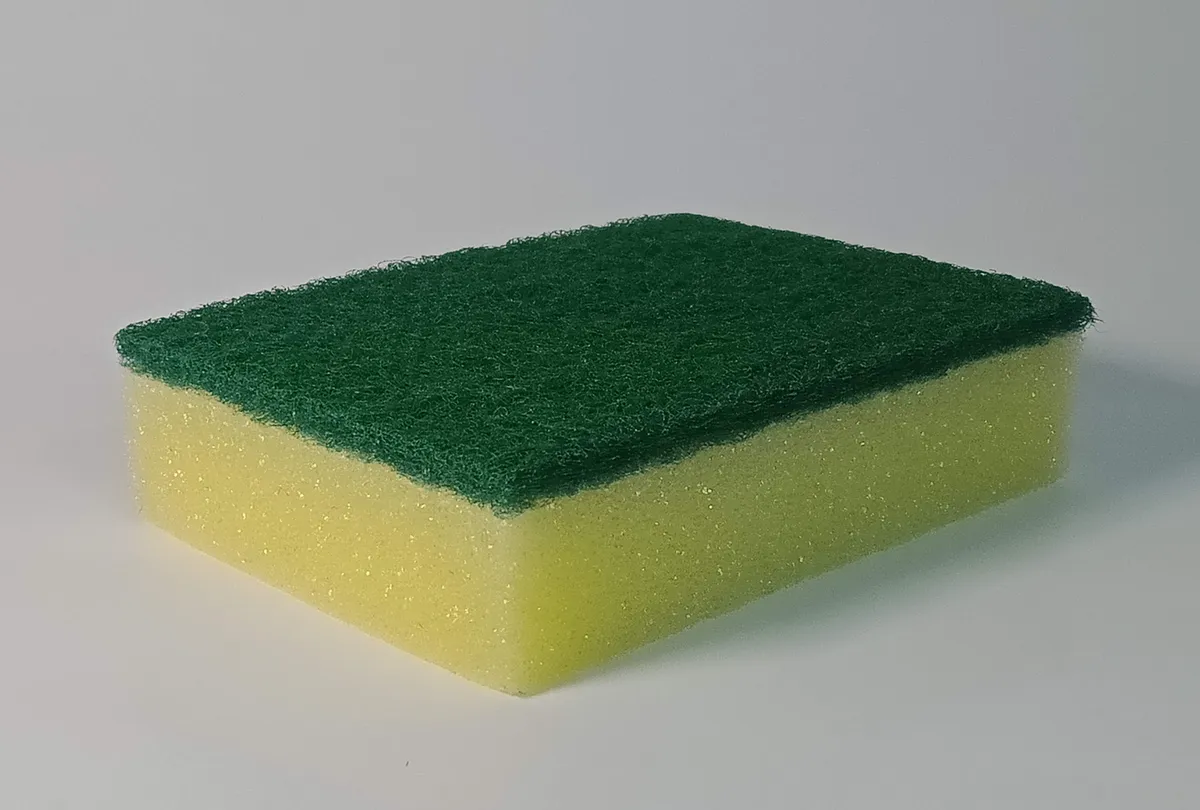 Source: User Jiafei Slay Queen from Wikimedia.

Once you use these long enough, you notice how they break down over time. Green flecks start flaking off the top, and chunks of both the top and bottom layers eventually tear off. They might get caught in your cookware. They definitely end up down the drain and into the sewer system, and probably into a beautiful lake or river somewhere.
Not to mention all the invisible microplastics. It's gross!
Right, let's buy some sponges made of natural materials.
I tried some 'natural' brands with a cellulose-sponge base and a walnut scrubber top, but for some reason those also contained plastic. Maybe in the scrubber? They were also pricier.
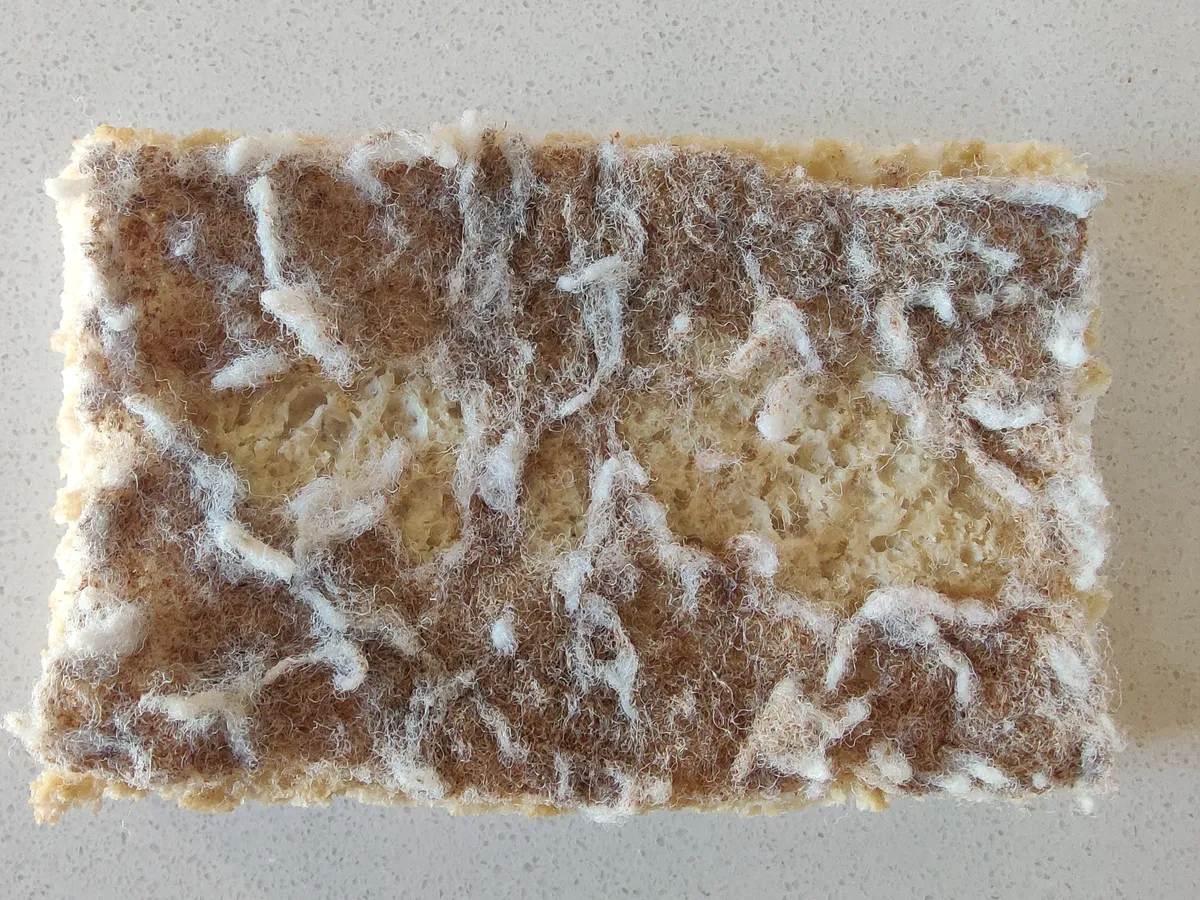 One of those sponges after a months-long tour of service. I assume the peeling fibers on top are plastic.
I also tried plant-based brushes, including one made out of coconut fibers and another with a wood handle and tampico fibers, but food would get caught in the fibers, and they took too long to dry and grew mold.
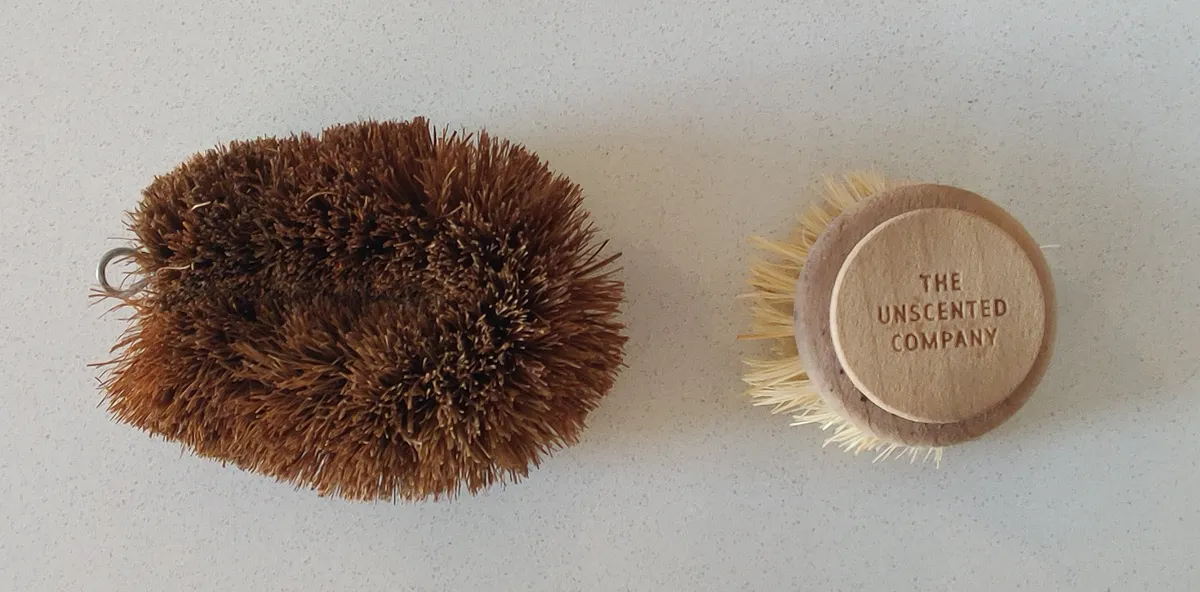 Bad for daily dish use due to the long dry times and mold, but pretty good for infrequent vegetable scrubbing.
Okay, what about a plain cellulose sponge? Trader Joe's has a pack of 12 for a good price.
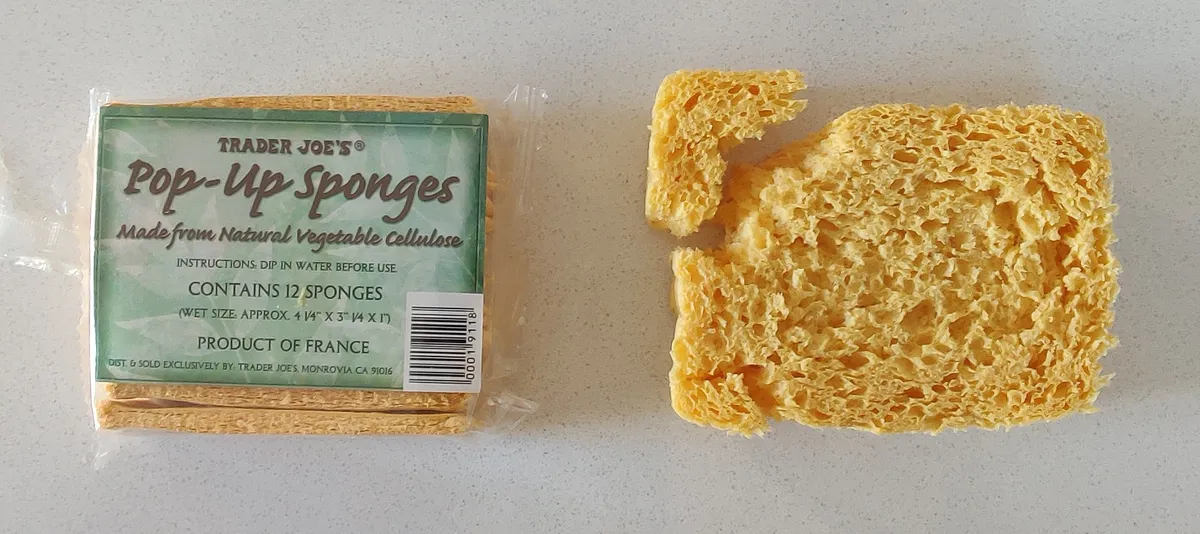 Sponge.
Well, it was very spongy and could hold a lot of water and soap. But it lacked scrubbing power.
Hmm, what else could I try that was biodegradable but wouldn't mold easily, had scrubbing power but was still gentle enough for non-stick, and economical in bulk?
I ordered some tubes off of Etsy. For some reason, not many in-person stores sold them by the tube.
Cut off a piece.
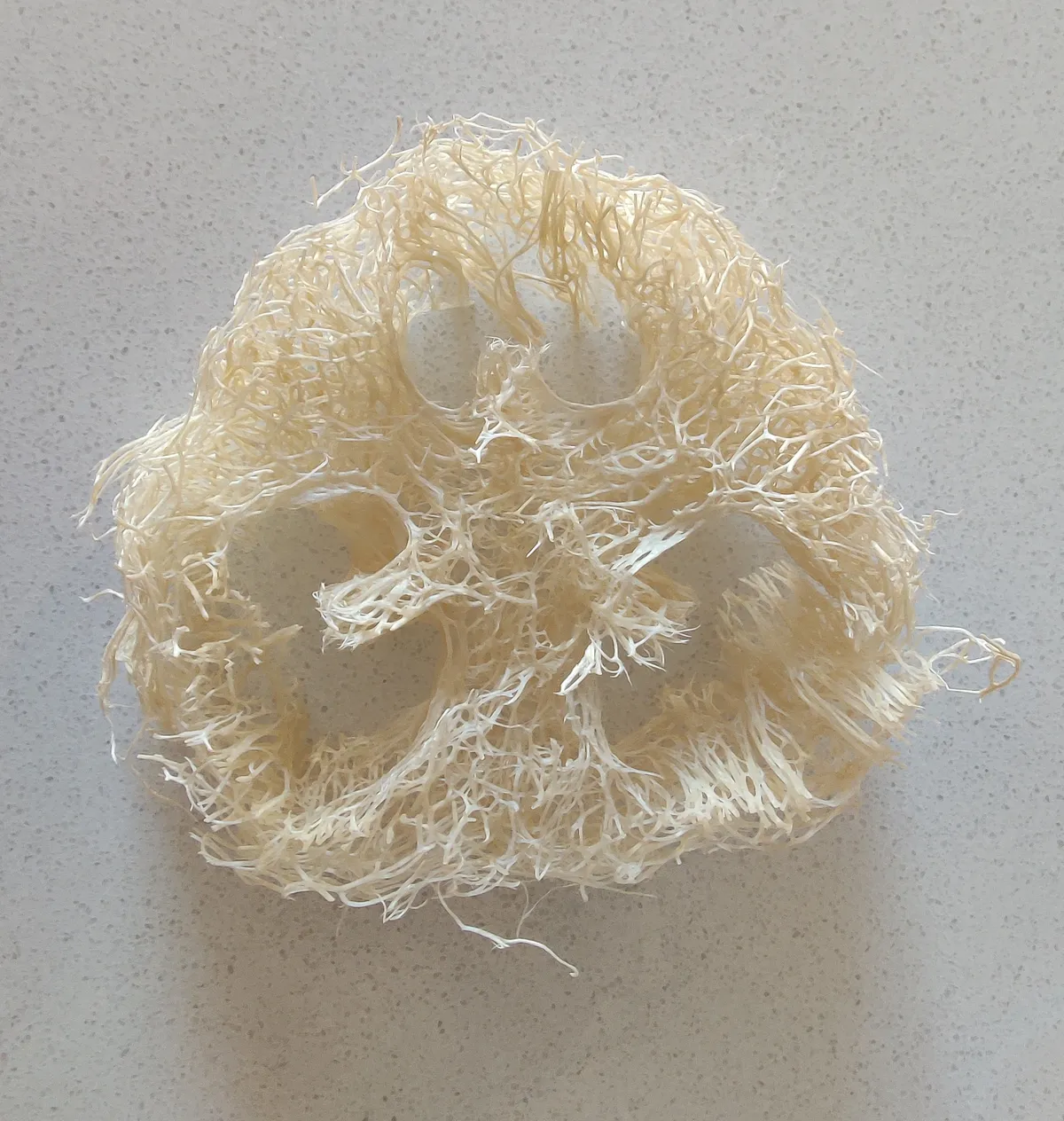
After a few weeks of scrubbing, it's been wonderful! Durable, no mold, good scrub strength1, and an extra bonus is that it's easy to flatten for tight crevices!
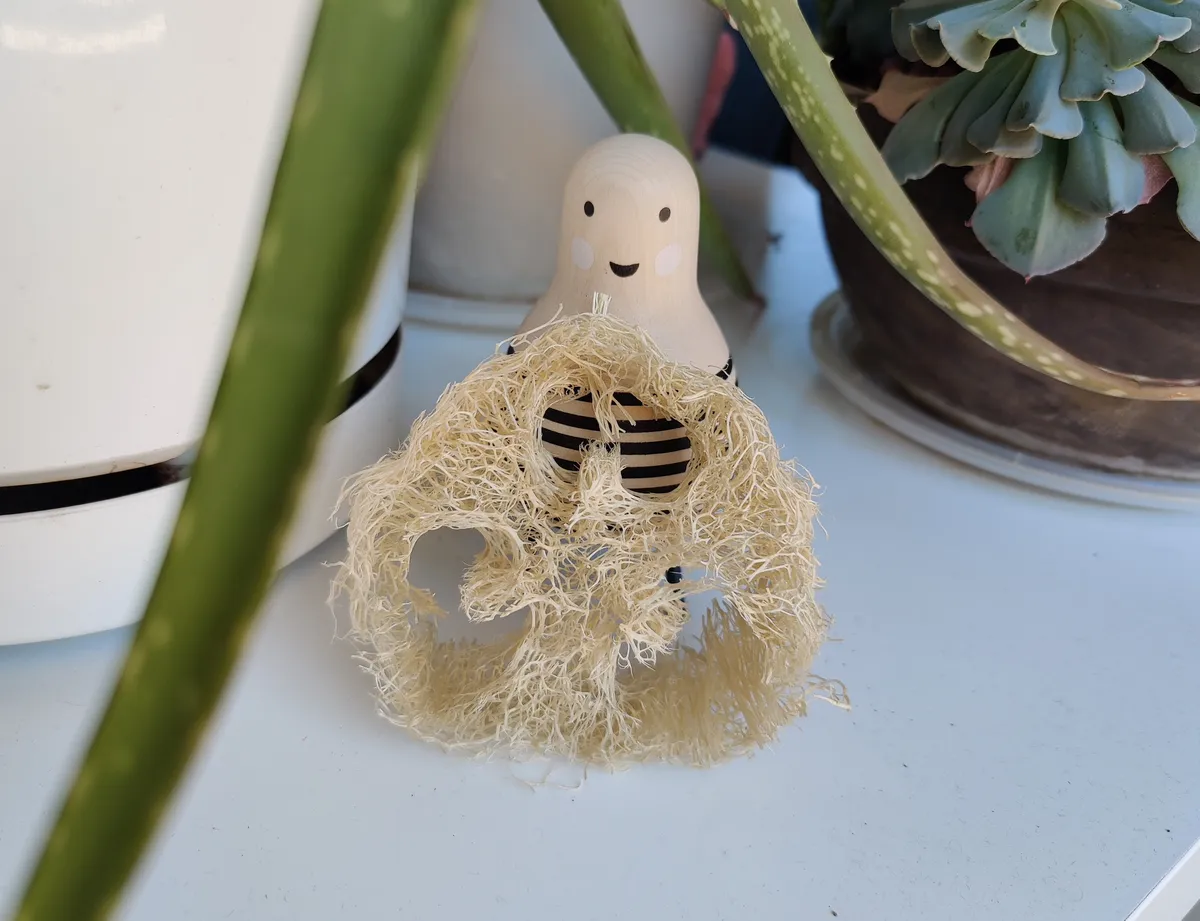 Dramatic re-creation of me using the loofah. Note the display of unbridled exuberance on the face of the wooden model.
And, I have plenty for the next decade.
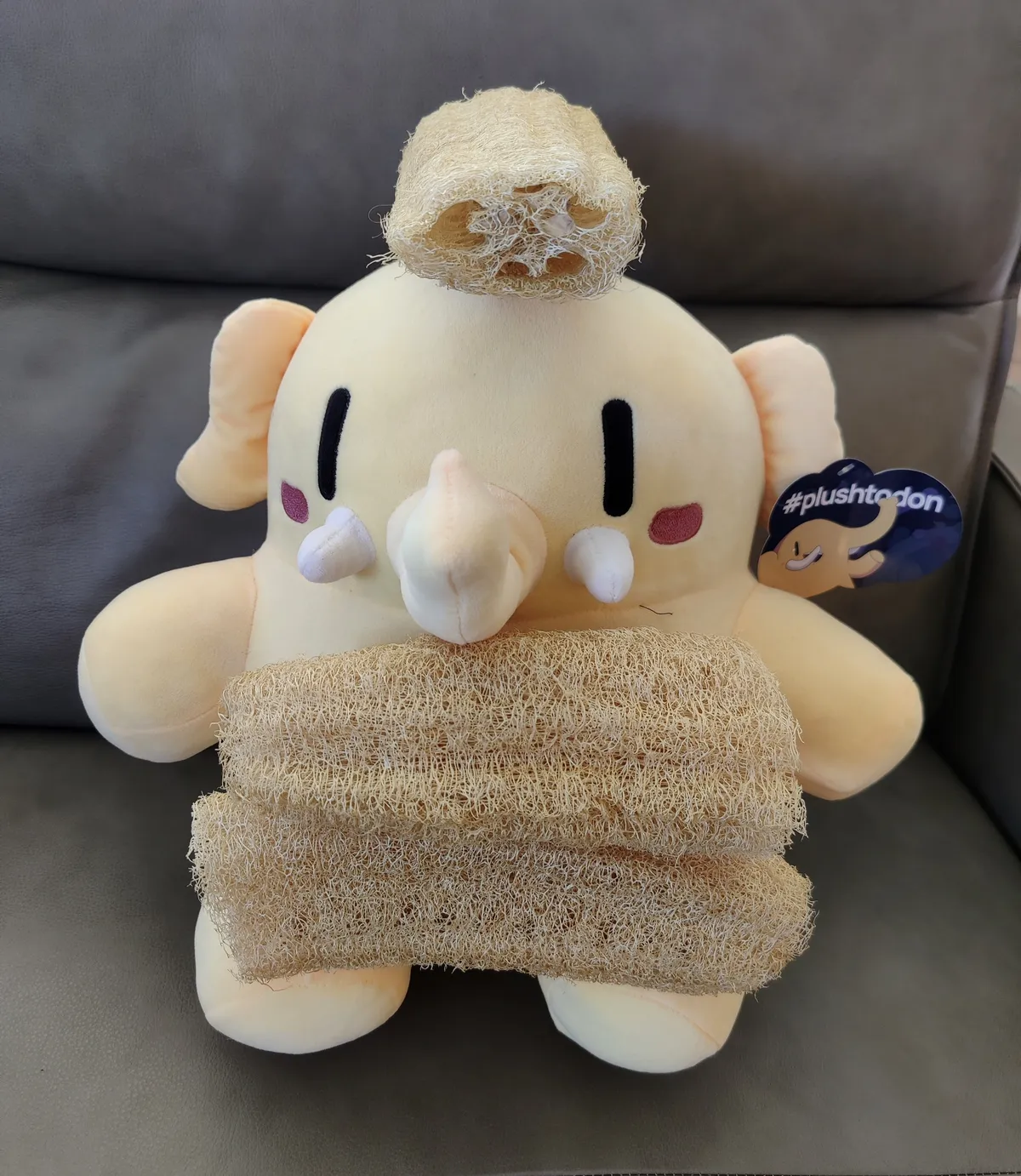
Thank you loofah <3
It's comparable to normal sponge scrubbers. Obviously it's no steel wool, but it works wonderfully for stuff that's been soaked. I usually use baking soda for anything that needs something more abrasive, like tea stains or burnt baking pans.↩